𝗜𝗻𝘁𝗿𝗼𝗱𝘂𝗰𝘁𝗶𝗼𝗻
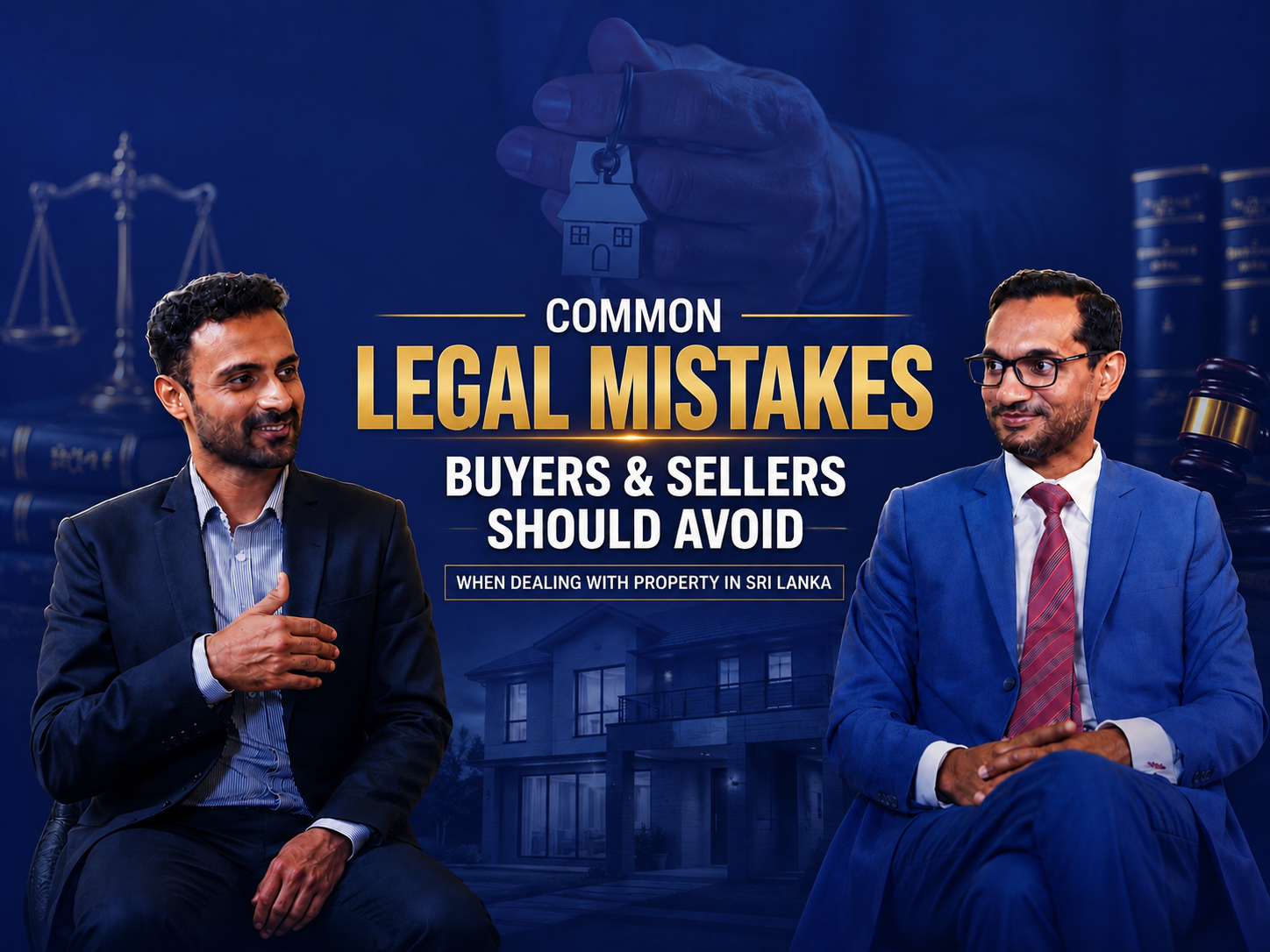
CeylonProperty.lk recently released a podcast conversation with Mr. Sameera Silva, covering some of the common legal mistakes buyers and sellers should be aware of when buying or selling property in Sri Lanka.
The discussion highlights how issues with building approvals, previous deeds, property plans, and legal documentation can create complications during a property transaction. Understanding these common mistakes can help local buyers, sellers, property investors, and Sri Lankans living overseas avoid unnecessary delays and legal problems.
𝗖𝗼𝗺𝗺𝗼𝗻 𝗟𝗲𝗴𝗮𝗹 𝗠𝗶𝘀𝘁𝗮𝗸𝗲𝘀 𝘁𝗼 𝗔𝘃𝗼𝗶𝗱
Buying or selling a property involves more than agreeing on a price and signing a deed. Buyers and sellers should make sure that the property, its documents, and everything included in the transaction are properly checked and legally documented before proceeding.
𝟭. 𝗕𝘂𝘆𝗶𝗻𝗴 𝗼𝗿 𝗦𝗲𝗹𝗹𝗶𝗻𝗴 𝗪𝗶𝘁𝗵𝗼𝘂𝘁 𝗮 𝗖𝗲𝗿𝘁𝗶𝗳𝗶𝗰𝗮𝘁𝗲 𝗼𝗳 𝗖𝗼𝗻𝗳𝗼𝗿𝗺𝗶𝘁𝘆
One common issue is proceeding with a property without checking whether a Certificate of Conformity (COC) is available. The COC confirms that the completed building conforms to the approved building plans and relevant requirements.
Problems can arise when a building plan was never properly approved or when changes were made to the property after approval. For example, a rooftop garden or another addition may have been constructed without obtaining the necessary approval. These differences should be identified and addressed before the property is bought or sold.
𝟮. 𝗡𝗼𝘁 𝗖𝗵𝗲𝗰𝗸𝗶𝗻𝗴 𝗣𝗿𝗲𝘃𝗶𝗼𝘂𝘀 𝗗𝗲𝗲𝗱𝘀 𝗮𝗻𝗱 𝗣𝗹𝗮𝗻𝘀
Buyers should not only focus on the current deed when purchasing a property. Previous deeds and relevant plans may also need to be examined as part of the legal due diligence process.
Checking the history of the property can help identify issues relating to ownership, boundaries, or previous transactions. Sellers should also make sure they have the relevant documentation available so that the buyer's legal checks can be completed without unnecessary delays.
𝟯. 𝗙𝗮𝗶𝗹𝗶𝗻𝗴 𝘁𝗼 𝗖𝗵𝗲𝗰𝗸 𝗔𝗹𝗹 𝗥𝗲𝗹𝗲𝘃𝗮𝗻𝘁 𝗗𝗼𝗰𝘂𝗺𝗲𝗻𝘁𝘀
Another common mistake is assuming that having a deed is enough to complete a property transaction. Buyers need to ensure that the relevant documents relating to the property are properly checked before proceeding.
This can include deeds, approved building plans, certificates, and other legal documentation relevant to the property. Sellers should also ensure that the documents they provide accurately reflect the property being sold.
𝟰. 𝗡𝗼𝘁 𝗖𝗹𝗲𝗮𝗿𝗹𝘆 𝗗𝗼𝗰𝘂𝗺𝗲𝗻𝘁𝗶𝗻𝗴 𝗪𝗵𝗮𝘁 𝗜𝘀 𝗜𝗻𝗰𝗹𝘂𝗱𝗲𝗱 𝗶𝗻 𝘁𝗵𝗲 𝗦𝗮𝗹𝗲
Anything that forms part of the property being sold should be clearly identified in the legal documentation. Relying only on verbal agreements can create problems later if there is a disagreement between the buyer and seller.
The legal documentation should clearly establish what is being transferred to the buyer. Once the property is sold, the relevant documents and items forming part of the transaction should be properly handed over and kept under the buyer's custody.
𝟱. 𝗟𝗲𝗮𝘃𝗶𝗻𝗴 𝗣𝗮𝗿𝘁𝘀 𝗼𝗳 𝘁𝗵𝗲 𝗣𝗿𝗼𝗽𝗲𝗿𝘁𝘆 𝗢𝘂𝘁 𝗼𝗳 𝘁𝗵𝗲 𝗗𝗲𝗲𝗱
A seller may sometimes agree to give a particular part of the property to the buyer but fail to include it properly in the deed. For example, a private room may be discussed as part of the transaction but omitted from the legal documentation.
This can have a negative impact on the buyer, particularly if they want to resell the property one day. If an important part of the property is not properly documented, questions can arise about the buyer's legal rights to that part of the property.
𝗖𝗼𝗻𝗰𝗹𝘂𝘀𝗶𝗼𝗻
Some of the most common property-related legal problems can arise when the physical property does not fully match the approved plans or when important details are not properly reflected in the legal documentation.
As Mr. Silva explains in the podcast, both buyers and sellers need to be mindful of these issues before completing a property transaction. Checking the relevant documents, approvals, previous deeds, and everything included in the sale can help reduce the risk of complications later.
For buyers and sellers, taking the time to address these issues before completing the transaction can make the process smoother and provide greater confidence in the deal. Listen to the full conversation with Mr. Sameera Silva on the CeylonProperty.lk podcast for a detailed discussion on common legal mistakes when buying and selling property in Sri Lanka.