
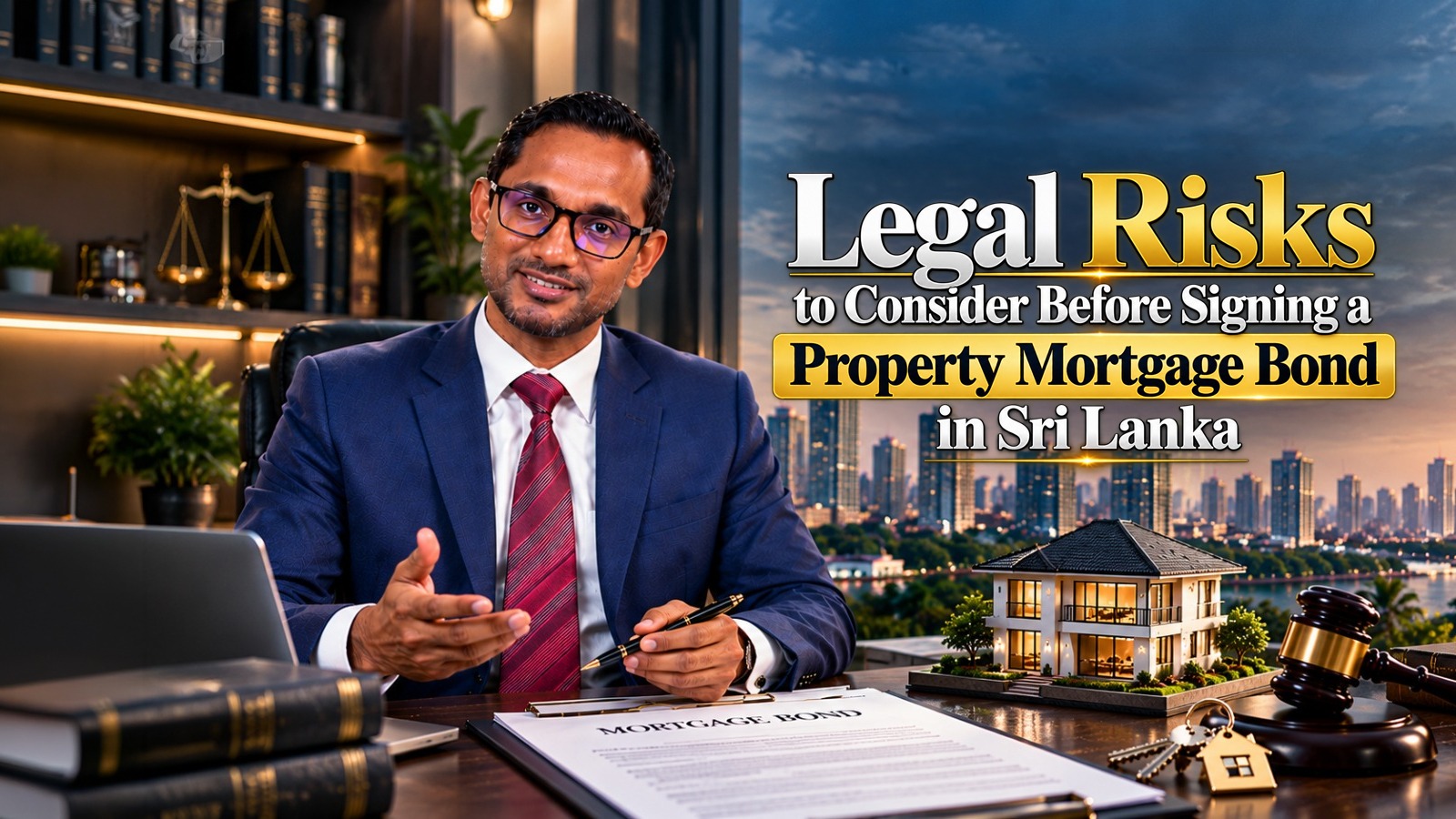
Taking out a bank loan against a property can help you access funds for a home purchase, business investment or other financial needs. However, before signing a property mortgage bond in Sri Lanka, it is essential to understand the legal obligations and risks involved.
A mortgage bond is a legal document that gives a lender security over a property to secure a loan or other financial obligation. If the borrower fails to meet the agreed repayment terms, the lender may have legal remedies to recover the outstanding debt, potentially putting the mortgaged property at risk.
Many borrowers focus mainly on the loan amount, monthly instalments and interest rate. However, the terms written into the mortgage bond can have significant consequences if financial circumstances change or repayments become difficult.
So, what should you check before signing a property mortgage bond in Sri Lanka?
Here are six important legal considerations every borrower should understand.
1. Check the Interest Rate: Fixed or Floating?
Before signing a mortgage bond or accepting a loan secured against your property, make sure you understand how the interest rate works.
Interest rates can affect the total amount you repay throughout the loan period. Depending on the loan agreement, the rate may be fixed for a specified period or may fluctuate according to the agreed terms.
A fixed interest rate generally remains unchanged for the period specified in the agreement.
A floating interest rate can change according to the terms of the loan, potentially increasing or decreasing your repayment obligations.
Before committing, ask the lender:
-
Is the interest rate fixed or floating?
-
If it can change, what determines the adjustment?
-
How will an interest rate increase affect my monthly instalments?
-
Could a change in the interest rate affect the total repayment amount?
Understanding these terms can help you assess whether the loan remains manageable if your financial circumstances or applicable interest rates change.
2. Read All Mortgage Bond Clauses Carefully
A mortgage bond is a legal commitment, not simply a document required to complete a bank loan.
Before signing, carefully review the clauses that explain your responsibilities as the borrower and the lender's rights if you fail to meet your obligations.
Pay particular attention to:
-
The amount of the loan or obligation being secured.
-
The interest rate and repayment terms.
-
The circumstances that constitute a default.
-
Any additional charges, fees or costs.
-
The lender's rights and remedies in the event of default.
-
Any clauses extending the security to other obligations, where applicable.
Do not assume that every mortgage bond follows identical terms. The wording of the document and the circumstances of the transaction matter.
If a clause is unclear, ask for an explanation before signing. A qualified lawyer can review the document and explain its legal implications.
Never sign a mortgage bond simply because the bank has approved your loan. Make sure you understand the obligations you are accepting.
3. Understand the Risks of Loan Default
One of the most important issues to consider is what happens if you cannot repay the loan as agreed.
A default may arise when a borrower fails to meet certain obligations under the loan agreement or mortgage bond. The specific circumstances that constitute a default should be identified in the relevant documents.
Depending on the agreement and applicable law, the lender may be able to demand repayment and pursue legal recovery procedures.
Where a property has been mortgaged as security, it may ultimately be at risk if the borrower fails to resolve the default and the lender lawfully exercises its rights.
Before signing, understand:
-
What events can trigger a default?
-
What happens if you miss a repayment?
-
Is there a notice or remedy period under the agreement or applicable law?
-
What steps can the lender take to recover the outstanding debt?
-
What legal consequences could arise if the default continues?
Do not wait until you miss a payment to understand these provisions.
If you anticipate repayment difficulties, contact the lender promptly and seek appropriate legal advice about your options.
4. Check the Penalty Interest and Additional Charges
Missing a loan repayment may have financial consequences beyond the original instalment.
Depending on the loan agreement, additional interest or other charges may apply when payments are overdue. These terms can increase the amount you owe and make it more difficult to bring the loan back up to date.
Before signing, check:
-
Whether penalty interest applies to overdue payments.
-
How the additional interest is calculated.
-
When penalty interest begins to apply.
-
Whether other default-related fees or recovery costs may arise.
-
How overdue amounts affect your outstanding balance.
For example, if you experience a temporary reduction in income and miss several repayments, additional charges could increase the amount required to settle the arrears.
The exact consequences depend on the contract and applicable law, so do not assume that all banks or mortgage bonds apply the same rules.
Understanding these provisions in advance can help you assess the full financial commitment involved.
5. Review Cross-Property and Additional Security Clauses
This is an important consideration for borrowers who own more than one property.
Some loan arrangements may include provisions concerning additional collateral, guarantees or security for other obligations. Depending on the wording and legal structure of the transaction, these provisions could affect assets beyond the property you initially expected to use as security.
For example, a borrower who owns a house and a separate investment property should not assume that only one property is exposed to risk without checking the relevant documents.
Before signing, establish:
-
Which property or properties are being mortgaged?
-
Does the bond secure only one specific loan or potentially other obligations as well?
-
Have any additional guarantees or security arrangements been included?
-
Could another property be affected by the agreement?
-
Are the security arrangements consistent with what you understood when accepting the loan?
Never assume that a mortgage bond affects only the property you had in mind. Confirm exactly what assets and obligations are covered by the documents.
If the wording refers to additional security, cross-collateralisation or other debts, seek legal advice before proceeding.
6. Understand Your Legal Obligations Before Committing
Signing a mortgage bond creates legal obligations that should not be taken lightly.
Before committing, make sure you understand the relationship between the loan agreement, the mortgage bond and any related guarantees or security documents.
You should also understand the consequences of failing to comply with the terms and the procedures that may apply if a dispute or default occurs.
Consider asking a qualified lawyer to review the documents before signing, particularly when the loan involves a high-value property, multiple properties, business borrowing or complicated security arrangements.
Professional legal advice can help you identify unclear clauses, understand the extent of your obligations and raise questions before you become legally committed.
Remember that understanding the loan amount and monthly instalment alone is not enough. You also need to understand the legal consequences of the agreement.
Frequently Asked Questions
What is a property mortgage bond in Sri Lanka?
A property mortgage bond is a legal instrument used to secure a loan or another obligation against property. It gives the lender security rights subject to the terms of the document and applicable Sri Lankan law.
Can a bank take action against my property if I fail to repay a loan?
A lender may have legal remedies if a borrower defaults on a secured loan. Depending on the circumstances, the agreement and applicable law, these may include procedures to enforce the mortgage security. The process and available remedies should be assessed by a qualified legal professional.
What is penalty interest on a mortgage loan?
Penalty interest is additional interest that may apply when a borrower fails to make payments as required. Whether it applies, how it is calculated and when it becomes payable depend on the relevant loan terms and applicable law.
Can a mortgage bond affect more than one property?
It can, depending on the security arrangements and the wording of the relevant documents. Borrowers should verify exactly which properties and obligations are covered before signing.
Should I consult a lawyer before signing a mortgage bond?
Obtaining independent legal advice before signing is a prudent step. A lawyer can review the bond, explain important clauses and help you understand the potential consequences of default.
Key Takeaway: Understand the Risks Before You Sign
A property mortgage bond can be an important part of financing a property purchase or accessing funds. However, it also involves legal and financial responsibilities that every borrower should understand.
Before signing, remember to:
-
Check whether the interest rate is fixed or floating.
-
Read every clause carefully.
-
Understand the consequences of default.
-
Review penalty interest and additional charges.
-
Confirm whether other properties or obligations could be affected.
-
Seek professional legal advice when necessary.
The most important step is to understand what you are agreeing to before you sign.
Taking time to review the documents and clarify the terms can help you make a more informed borrowing decision and better understand the risks to your property.
Learn More About Property Law in Sri Lanka
Property decisions involve more than finding the right land, house or apartment. Understanding the legal documents behind a transaction is equally important.
Follow the CeylonProperty.lk Lawyers Podcast Series for more practical discussions on property ownership, legal protection and important considerations when buying or investing in real estate in Sri Lanka.
Explore property opportunities across Sri Lanka at CeylonProperty.lk.